2025-12-03 Daily Challenge
Today I have done leetcode's December LeetCoding Challenge with cpp.
December LeetCoding Challenge 3
Description
Count Number of Trapezoids II
You are given a 2D integer array points where points[i] = [xi, yi] represents the coordinates of the ith point on the Cartesian plane.
Return the number of unique trapezoids that can be formed by choosing any four distinct points from points.
A trapezoid is a convex quadrilateral with at least one pair of parallel sides. Two lines are parallel if and only if they have the same slope.
Example 1:
Input: points = [[-3,2],[3,0],[2,3],[3,2],[2,-3]]
Output: 2
Explanation:
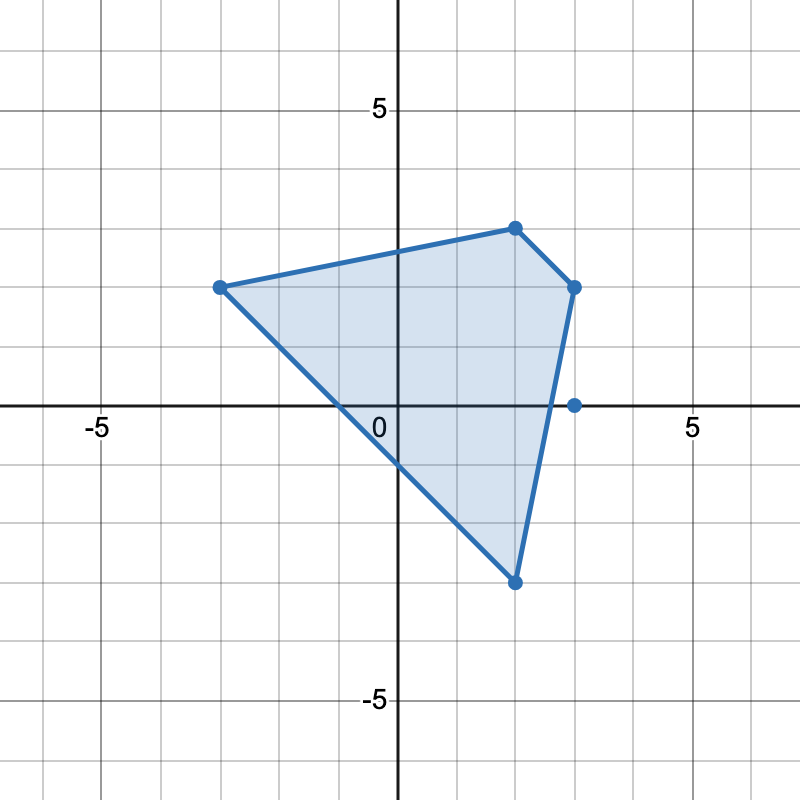
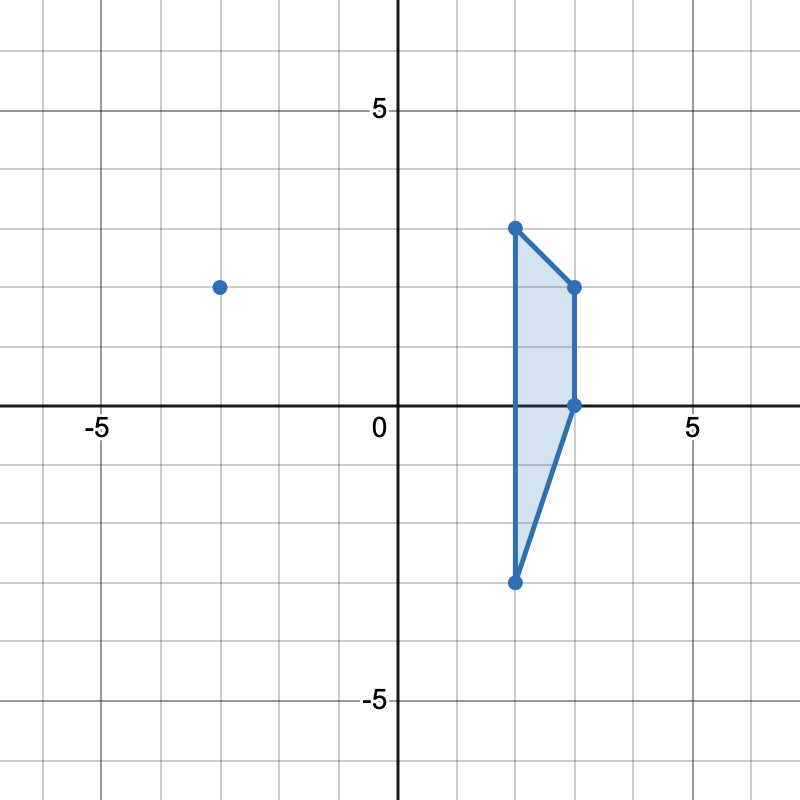
There are two distinct ways to pick four points that form a trapezoid:
- The points
[-3,2], [2,3], [3,2], [2,-3]form one trapezoid. - The points
[2,3], [3,2], [3,0], [2,-3]form another trapezoid.
Example 2:
Input: points = [[0,0],[1,0],[0,1],[2,1]]
Output: 1
Explanation:
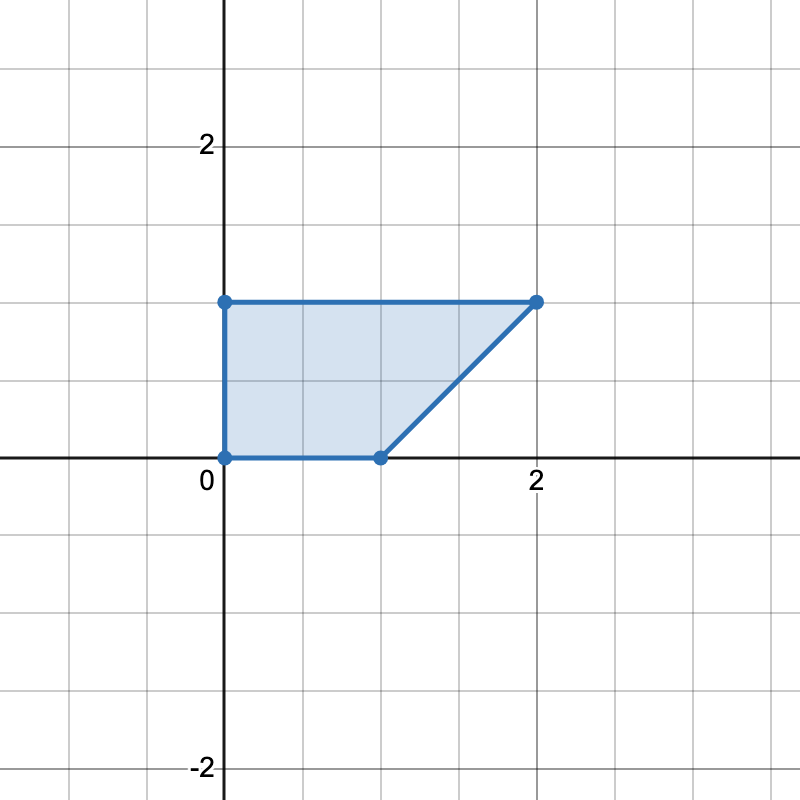
There is only one trapezoid which can be formed.
Constraints:
4 <= points.length <= 500–1000 <= xi, yi <= 1000- All points are pairwise distinct.
Solution
class Solution {
  int count(unordered_map<int, unordered_map<int, int>> &mp) {
    long long result = 0;
    for(auto &[k1, inner] : mp) {
      long long sum = 0;
      for(auto &[_k2, val] : inner) {
        sum += val;
      }

      for(auto &[_k2, val] : inner) {
        result += val * (sum - val);
        sum -= val;
      }
    }
    return result;
  }
public:
  int countTrapezoids(vector<vector<int>>& points) {
    unordered_map<int, unordered_map<int, int>> t, v;
    int sz = points.size();
    for(int i = 0; i < sz - 1; ++i) {
      for(int j = i + 1; j < sz; ++j) {
        int dx = points[j][0] - points[i][0];
        int dy = points[j][1] - points[i][1];

        if(dx < 0 || (dx == 0 && dy < 0)) {
          dx = -dx;
          dy = -dy;
        }

        int g = gcd(dx, abs(dy));
        int sx = dx / g;
        int sy = dy / g;

        int des = sx * points[i][1] - sy * points[i][0];

        int key1 = (sx << 12) | (sy + 2000);
        int key2 = (dx << 12) | (dy + 2000);
        t[key1][des] += 1;
        v[key2][des] += 1;
      }
    }
    return count(t) - count(v) / 2;
  }
};

// Accepted
// 550/550 cases passed (2204 ms)
// Your runtime beats 60.87 % of cpp submissions
// Your memory usage beats 46.74 % of cpp submissions (555.9 MB)